
.png "Will plant-based diets lower your risk of prostate cancer?")
Will plant-based diets lower your risk of prostate cancer?
Another review gives empowering proof.
Would you like to eat a better eating routine while assisting with saving the planet? Take a stab at turning into a veggie lover. You'll try not to help a creature agribusiness industry that discharges immense measures of ozone depleting substances, and the food varieties you eat will bring down your chances of creating coronary illness and diabetes.
Plant-based eats less carbs are additionally connected with lower takes a chance for specific diseases. However, shouldn't something be said about prostate disease explicitly?
.png "Will plant-based diets lower your risk of prostate cancer?")
Recently, specialists distributed results from an exhaustive survey of the writing on plant-based diets and prostate malignant growth risk. They inferred that separated from enjoying benefits for cardiovascular wellbeing and personal satisfaction, plant-based eats less carbs can possibly further develop prostate malignant growth results.
Are you taking a multivitamin?
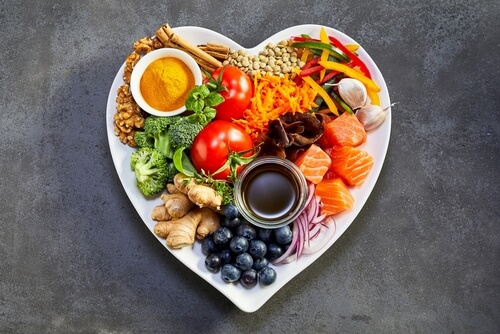
Plants contain various enemy of disease mixtures like flavonoids, tannins, and resveratrol. Cooking meat, then again (particularly red and handled meats) creates two kinds of cancer-causing agents: heterocyclic amines, which emerge during skillet singing, and polycyclic fragrant hydrocarbons, which are delivered by barbecuing or grilling.
The scientists behind this new audit surveyed 32 examinations assessing potential connections between plant-based diets and lower prostate malignant growth risk. 33% of the examinations were observational, implying that the exploration had depended on previous data contained in data sets and wellbeing vaults. The other examinations were interventional; the selected subjects in these examinations were prostate disease patients who had been followed over the long haul to check whether dietary changes, work out, stress the executives, and other way of life mediations would prompt improved results.
As a general rule, the examinations inclined in the direction of gainful impacts from consuming plant-based dinners. The vast majority of the observational examinations found that plant-eaters created prostate disease at lower rates than meat-eaters. Furthermore, 60% of the interventional concentrates on detailed that prostate-explicit antigen (public service announcement) levels expanded all the more leisurely in plant-eaters contrasted with meat-eaters. An ascent in public service announcement recommends prostate malignant growth is deteriorating, or repeating in men who have previously been treated for the sickness.
.png "Will plant-based diets lower your risk of prostate cancer?")
Discourse and setting
The survey creators singled out the proof on public service announcement, as well as better in general wellbeing and deferred needs for extra prostate malignant growth treatment among plant-eaters, to help an end that vegan consumes less calories are defensive. In any case, huge scope clinical preliminaries are as yet expected to affirm the affiliation, forewarned Dr. Stephen Freedland, a urologist and the head of the Middle for Coordinated Exploration in Disease and Way of life at Cedars-Sinai Clinical Center in Los Angeles.
In a subsequent publication this previous October, Dr. Freedland and his co-creators underlined weaknesses in the current information. For example, the interventional concentrates on referred to in the new survey paper are little (less than 100 subjects each), with subsequent meet-ups enduring something like a year, and the observational proof is not really consistent, considering that a few examinations recognized no relationship between prostate malignant growth hazard and veggie lover slims down, while others created blended results.
One more issue is absence of agreement on what comprises a plant-based diet. Definitions can go from outrageous veggie lover, to semi-vegan, or basically plant-based, where some meat utilization is permitted. Without a doubt, one of the mediations referred to in the survey was depicted as "an expansion in plant-based food and sleek fish and a decrease or disposal of land-creature based protein."
.png "Will plant-based diets lower your risk of prostate cancer?")
"What we truly need in this space are all the more thoroughly planned, all around controlled randomized clinical preliminaries," Dr. Freedland says. "We want to figure out whether diet is truly defensive, or then again assuming veggie lovers and vegetarians are just more wellbeing cognizant in alternate ways. Is it true or not that they are practicing more? Improve admittance to medical services? Do they reside in places with better air quality? These are the issues we really want to reply."
In spite of these impediments, Dr. Freedland portrayed the proof partner vegetarianism and lower prostate malignant growth risk as captivating and empowering. Meanwhile, he prompts that the best way of life procedure for decreasing disease risk by and large is to stay away from stoutness. "That is where we have the best proof," he says.





.png)


.png&description=Will plant-based diets lower your risk of prostate cancer?)